
In modern industrial design, the gap between screen representation and physical reality remains a critical challenge. While computer-aided design (CAD) software allows engineers to specify exact dimensions and perfect geometries, it often fails to communicate the subtle nuances of physical surface intent. That is why digital manufacturing needs visual standards to align design expectations with actual factory outputs.
The Disconnect Between Code and Material
A digital file contains clean vectors and mathematical coordinates. However, when those instructions translate to physical processes like CNC milling, laser etching, or 3D printing, the material responds to physical variables. Tool wear, laser power fluctuations, and material grain differences create variations that a CAD file cannot predict. Without standardized visual references, quality control teams are forced to rely on subjective evaluations, leading to costly disputes and rejected batches.
Key Pillars of Surface Standardization
To establish objective benchmarks, manufacturers must focus on three core visual attributes:
- Visual Contrast: Defining how light reflects off different areas of a component, especially on laser-marked or engraved surfaces.
- Edge Definition: Determining the transition sharpness between different textures or planes to prevent burrs or bleeding marks.
- Surface Consistency: Ensuring that the texture remains uniform across the entire batch, without unexpected tool marks or surface blemishes.
Bridging the Gap with a Tactile Atlas
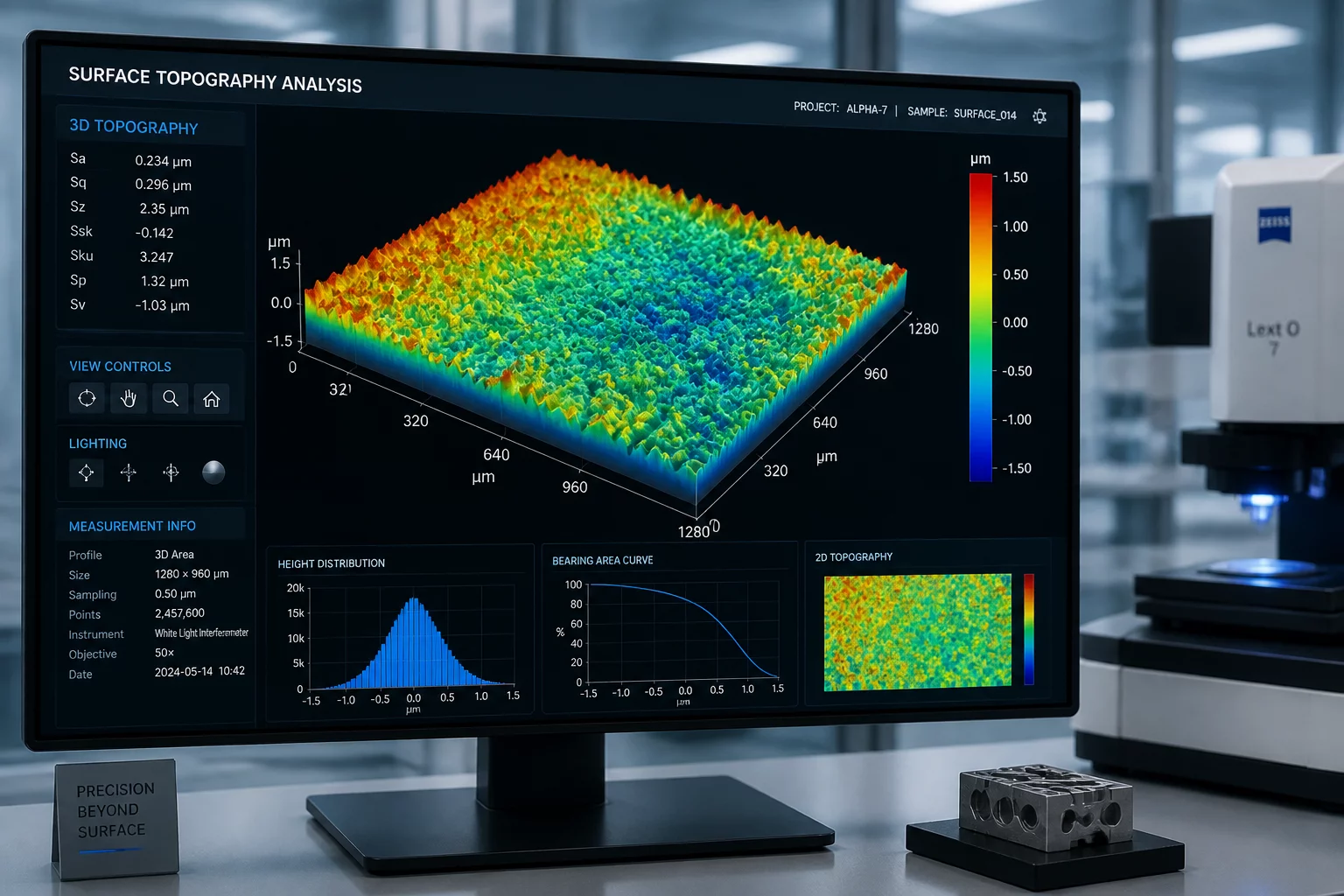
Digital measurements like Ra (roughness average) are useful but do not capture the human visual experience. A physical catalog, or Surface Atlas, serves as a universal translator. When both designers and machine operators look at the same physical sample, they share a common visual vocabulary. This drastically reduces the time spent on design iterations and quality sign-offs.
Frequently Asked Questions
Why aren't digital mockups enough for quality control?
Digital mockups do not account for ambient lighting conditions, material reflectivity, or the tactile feel of the finished product. Physical standards provide a real-world benchmark that digital rendering tools cannot accurately simulate.
How do visual standards reduce manufacturing costs?
By establishing clear visual limits for acceptable surface variations, teams avoid unnecessary rejection of parts that are functional and visually consistent. This minimizes waste and speeds up the production lifecycle.



Discussion
Standards are indeed lacking.
No comments yet
Be the first to share your thoughts on this article!
Leave a Comment